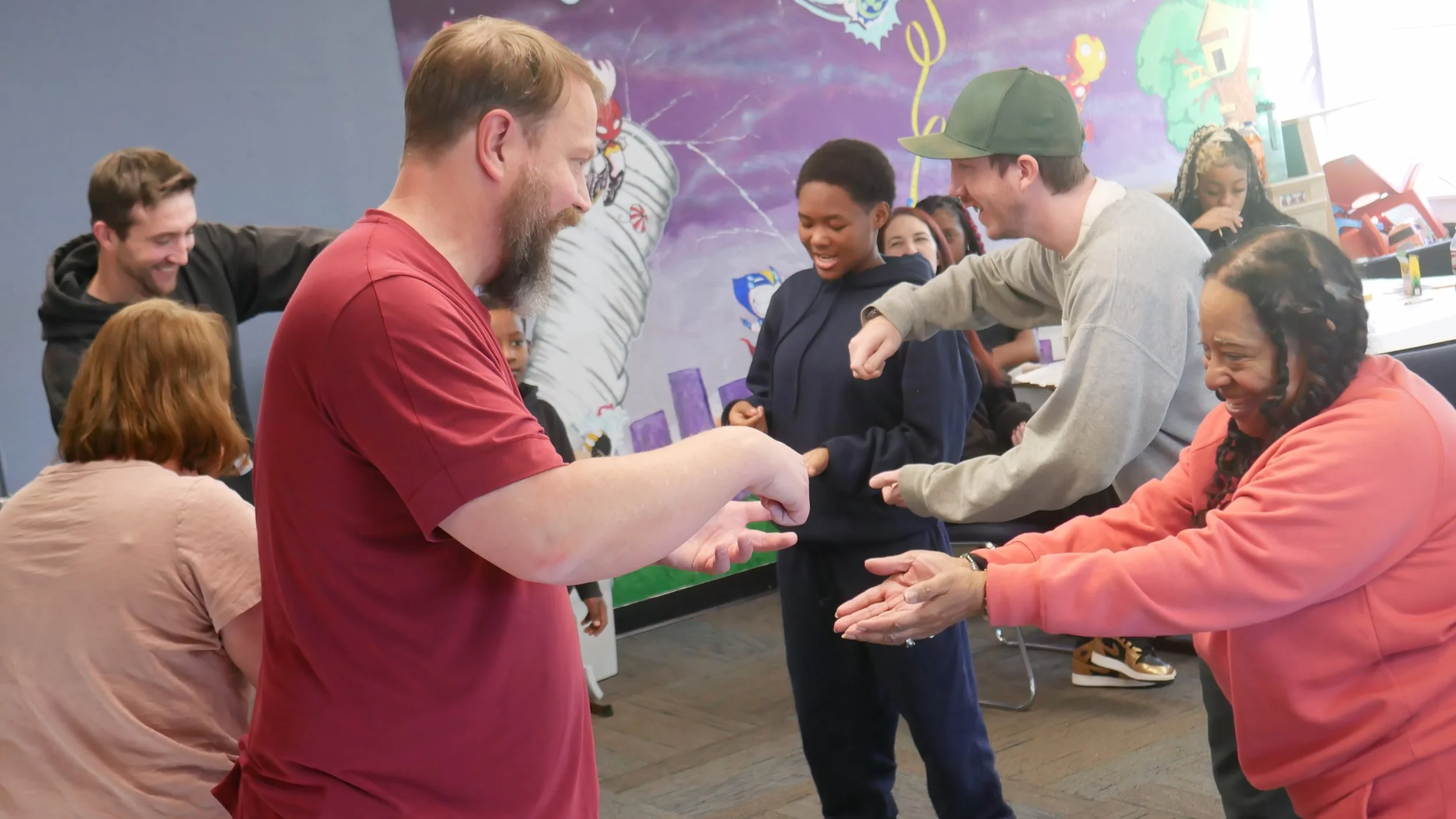
RedLine is a proud partner and administrator of the Arts in Society grant. Funded through a cohort of Colorado foundations and government agencies, this collaborative program provides grants to both individuals and organizations that use art as a vehicle to promote social justice and community welfare.
We love highlighting our Arts in Society (AiS) grant recipients and all the unique and impactful projects made possible by their grant.
We’re excited continue this series by highlighting 2025 Arts in Society project: “Coalition for Creative Practice in Colorado Prisons.” In Part 3 of this blog series, we explore Grapefruit Lab, a hybrid performance company in Denver supporting art that humanizes, entertains, challenges, and brings viewers into conversation.
Learn how they’re teaming up with Impact Arts and Unbound Authors to form the Coalition for Creative Practice in Colorado Prisons, a collaborative Arts in Society project!
Tell us about your organization
In 2007, Julie Rada (co-founder) was working with The LIDA Project and Countdown to Zero in Denver. Miriam Suzanne (co-founder) had recently moved to town and saw a show, My Name is Rachel Corrie. LIDA was planning to tour the show around the U.S. in the upcoming weeks, and needed some help to make that happen. Though we had just met, Miriam joined Julie on the road and we became fast friends, aligned in art making and values.
Around the same time, Kenny Storms (our third co-founder) came on to help with stage management and design on another show Julie was directing. In addition to making work and hanging out, the three of us started gathering with a few other performers on Sunday mornings to share artistic vocabulary and do performance training. We called it “Sunday School,” and we followed it up with long brunches and conversation.
Unlike most theatre companies that dream up shows and plan seasons, we are doers. We all had ideas for original projects we wanted to do and we started making them happen: Julie made a murder one less and performed at the Boulder Fringe Festival in 2009, Kenny started a monthly performance salon called 10X10, and Miriam created Missa Populi in 2010.
With time, we realized we needed a container to hold all our projects and plans, so we created a loose company, “Vicious Trap.” The work took shape, and we decided to commit.
We had already made a lot of work before we formed a 501c3. With some thought and planning, we developed our mission: Together, we practice a more queer and humane future through hybrid performance.
We developed a vision where collaborative art is an ongoing practice of radical community and collective healing, treating performance as an embodied process for imagining, exploring, and deepening our humanity.
Many people ask us how we got the name Grapefruit Lab. It comes from Yoko Ono, winking and suggesting that a grapefruit is a hybrid of a lemon and an orange. Of course it’s not, but this idea of hybridity was inspiring to us: that we can blend genres and disciplinary forms, that we cross borders from community spaces to professional arts spaces. We aim to have our work bridge those divides.
As co-founders, we use our time together creating art to practice our values—aspiring to be relational, inclusive and accessible, sustainable, and transparent and accountable. These are practices. We aren’t perfect, but we are trying.
Tell us about your first project that will utilize your Arts in Society Colorado Arts Grant
Grapefruit Lab is grateful to Arts in Society support for our RECIPE 3.0: Nourishment from the Inside project. We applied for our Arts in Society Colorado art grant in partnership with two sister organizations—Impact Arts and Unbound Authors. Together, we are the Coalition for Creative Practice in Colorado Prisons.
This is the third iteration of Grapefruit Lab’s RECIPE projects, the first which premiered in Denver’s Five Points neighborhood in January 2020, a performance based on verbatim stories from the diverse people who called the neighborhood home over a century.
RECIPE 2.0 was an online archive of interviews, dances, and stories, led by Grapefruit Lab’s colleagues, Theatre Artibus and Emancipation Theater. This project is about creating fun and meaningful visitation events for incarcerated individuals and their loved ones.
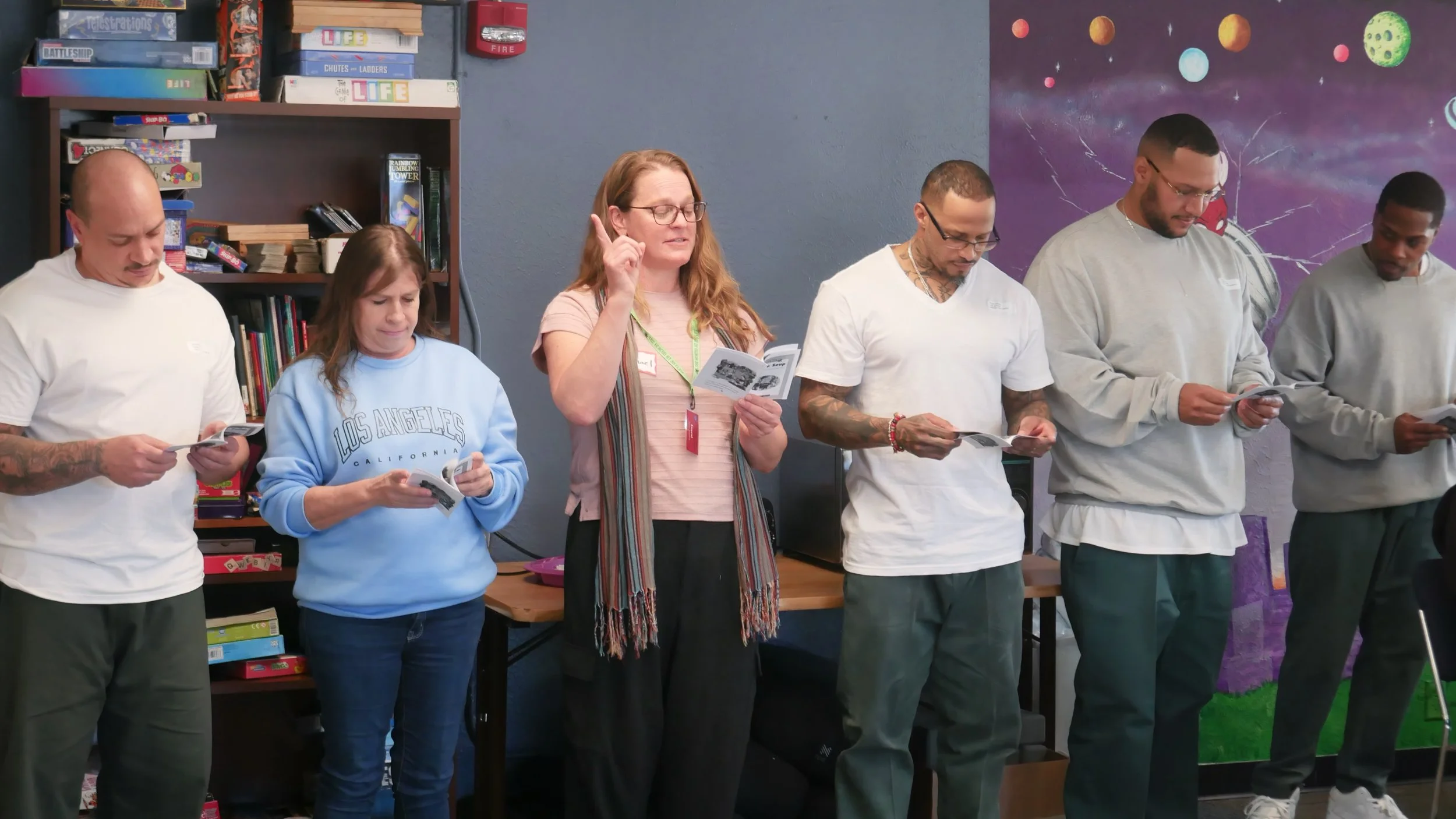
We’re hosting these 3-hour events at 7-10 correctional facilities across the state. Each RECIPE event includes large and small group activities centering on the ideas of food and family through storytelling, creative arts, and recipe sharing. We also provide approved snacks for the participants.
The stories and recipes from the event will be collected and edited and turned into a published cookbook entitled Inside Out Cookbook: Nourishment from the Inside.
Thanks to additional support from Denver Arts & Venues, the writings will also forge the basis for a theatrical script to be performed by professional actors for the public and at the Denver Correctional Complex.
What's next in the pipeline for your organization? What other projects are you dreaming up for next year, and how will your AiS grant help to support these efforts?
At Grapefruit Lab, the prison work we do happens under our “ACT Ensemble” program line. We’ve been operating as a volunteer organization within the Colorado Department of Corrections since 2017.
Over the years, we’ve expanded our team of facilitators to include musicians, writers, and visual artists/designers. ACT Ensemble is fundamentally about creating spaces of possibility.
ACT Ensemble believes high-quality, aesthetically-rich art should be available to all, rather than inaccessible and elitist. We believe in the intrinsic value of art for all lives. We believe all people possess the capacity for wonder and art. .
In addition to the RECIPE family events, ACT Ensemble facilitates programming weekly in Sterling Correctional Facility and Limon Correctional Facility. Some of the incarcerated ensemble members inside have been engaging with our work weekly for years and we consider them vital members of our team.
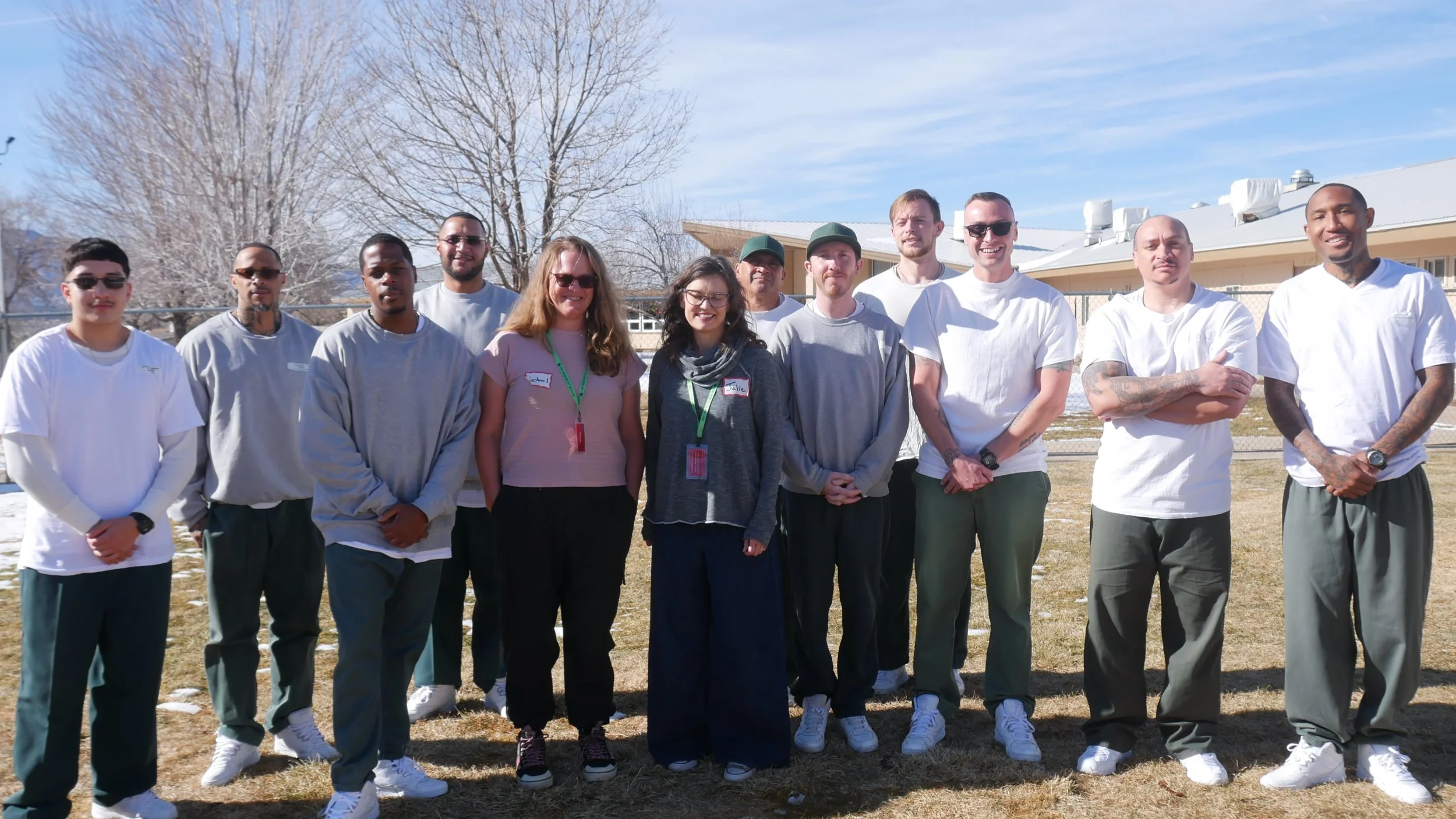
The Limon ensemble is currently rehearsing the iconic 20th-century play Twelve Angry Men for a professional-level, fully staged production. This is potent work in prison since many of the folks we work with were convicted by a jury, but have never served on one.
We’ve added some dancing and original music and we are putting our spin on the production. We have two dedicated casts of incarcerated artists and designers. We hope for a short run of performances at the prison this summer with an audience of the public, the population, staff, and family members.
Running concurrently to our rehearsals for the theatre production, we’re in the middle of an oral history project of interviews with insider artists that we hope can land in a public archive by the end of this calendar year.
At Sterling, the ensemble are rehearsing short scenes from contemporary plays from the American theatre. These are edgy, topical, challenging, and award-winning dramas, and our Sterling ensemble is attacking this content with focus, skill, humor, and creativity.
We’re also running short-term programming at the Denver Reception & Diagnostic Center, starting up an 8-session workshop exploring Theatre of the Oppressed practices in May, and we have some summer workshops planned in Cañon City at Centennial and Colorado Territorial Correctional Facility.
We don’t just do arts in prisons! We’re currently remounting a play about solitary confinement called Liberty by Any Means, written and performed by Michael Clifton, who spent cumulatively five years of a 20+ year prison sentence in a solitary cell.
This month, we’re embarking on a development process for a new staged work entitled Clockwork Utopia, based on the idea that all societies get the failed utopias they deserve. We’re incorporating music from local band, Teacup Gorilla, and inviting the Denver playwright, Ellen K. Graham, to come play with us in creating this original multidisciplinary performance.
For Pride Month this June, we’ll be bringing back our meditation on gender, identity, and Aristotle's b.s. in Pity + Fear, to be performed at a library in Westminster. Our efforts to practice a more queer, humane world have been bolstered by the support from AiS. We are a two-person volunteer staff who are hustling to create as much art in dark times and in dark places as we can.
The partnership with our friends in the Coalition for Creative Practices in Colorado’s Prisons, and the material support from the Arts in Society Colorado arts grant, have gone a long way in allowing us to engage teams of artists from various walks of life—and in helping us make our work more sustainable.
What was your experience like when applying for an Arts in Society grant? What tips would you share with artists looking to apply?
Our main suggestion is to find a team of folks you can partner with and to think beyond your geographic area. How can you cast a net to include programming in the areas of Colorado that have fewer people and anchor institutions, but who are no less deserving of dazzling or challenging art?
It’s really exciting to be part of a cohort of other artists who are working in grassroots ways to uplift the voices and stories of their communities. We’ve been so inspired hearing from the other Arts in Society grantees.
More than anything, we recommend that artists try. We’ve been involved in a handful of projects over the years that have been funded by Arts in Society, and know a lot of folks who’ve gotten money for their dreams. We’ve also applied and not received funding.
While that can be disheartening because all grant applications are a lot of work, it’s still very possible to keep refining your vision, finding your partners and people, and continue applying. Arts in Society means it when they say they want to support what we do.
We firmly believe they would fund all of our programming if they could, so keep trying!
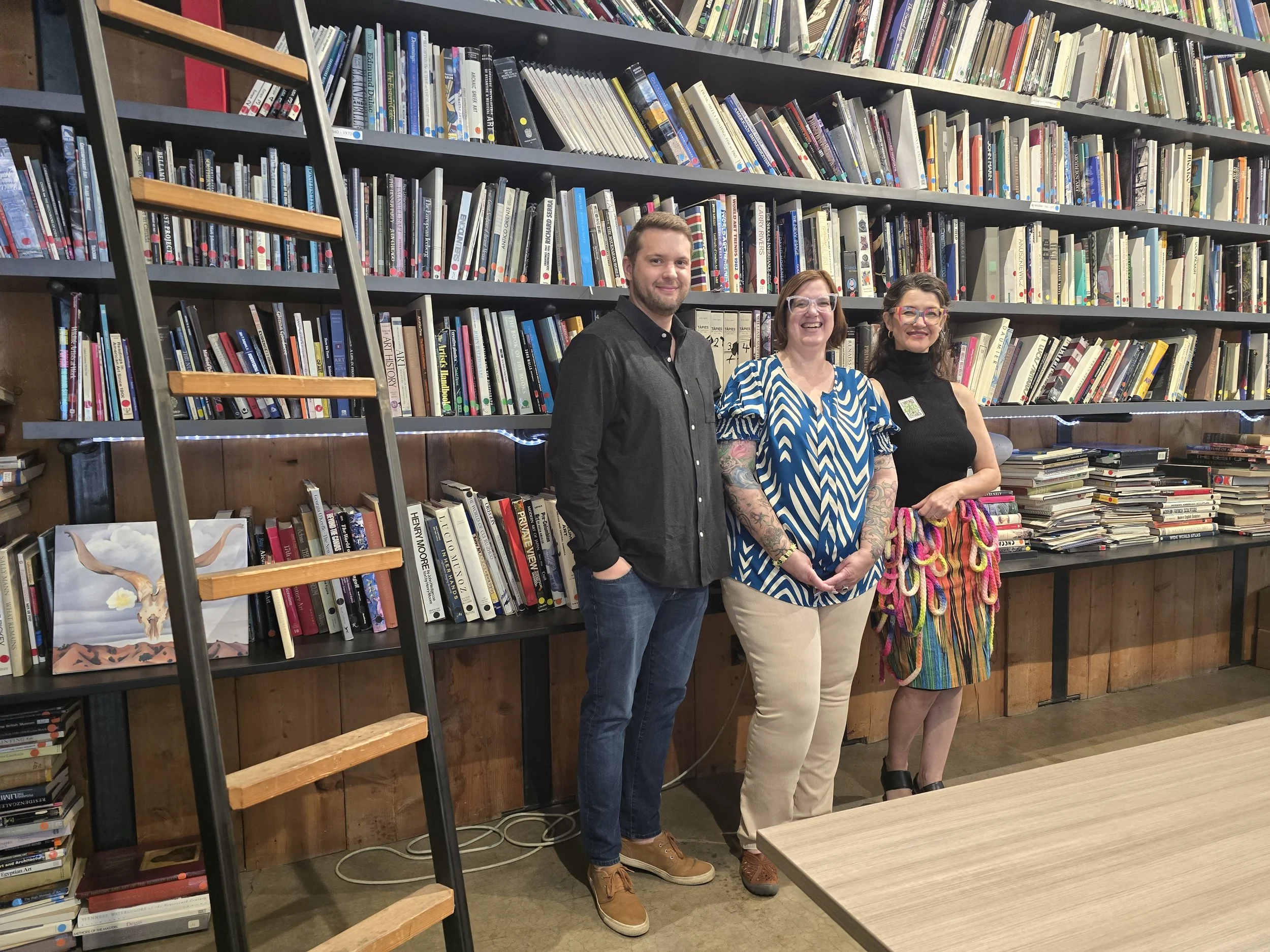
Arts in Society Grantee Project Highlight: Coalition for Creative Practice in Colorado Prisons (Pt. 2)
Learn how Unbound Authors works inside and alongside the state’s correctional facilities to build communication skills, confidence, and connection through writing.

Administered by RedLine and funded through a cohort of Colorado foundations and government agencies, Arts in Society is a grant program supporting cross-sector work through the arts across Colorado.